The Turkish National Pavilion in Burkina Faso
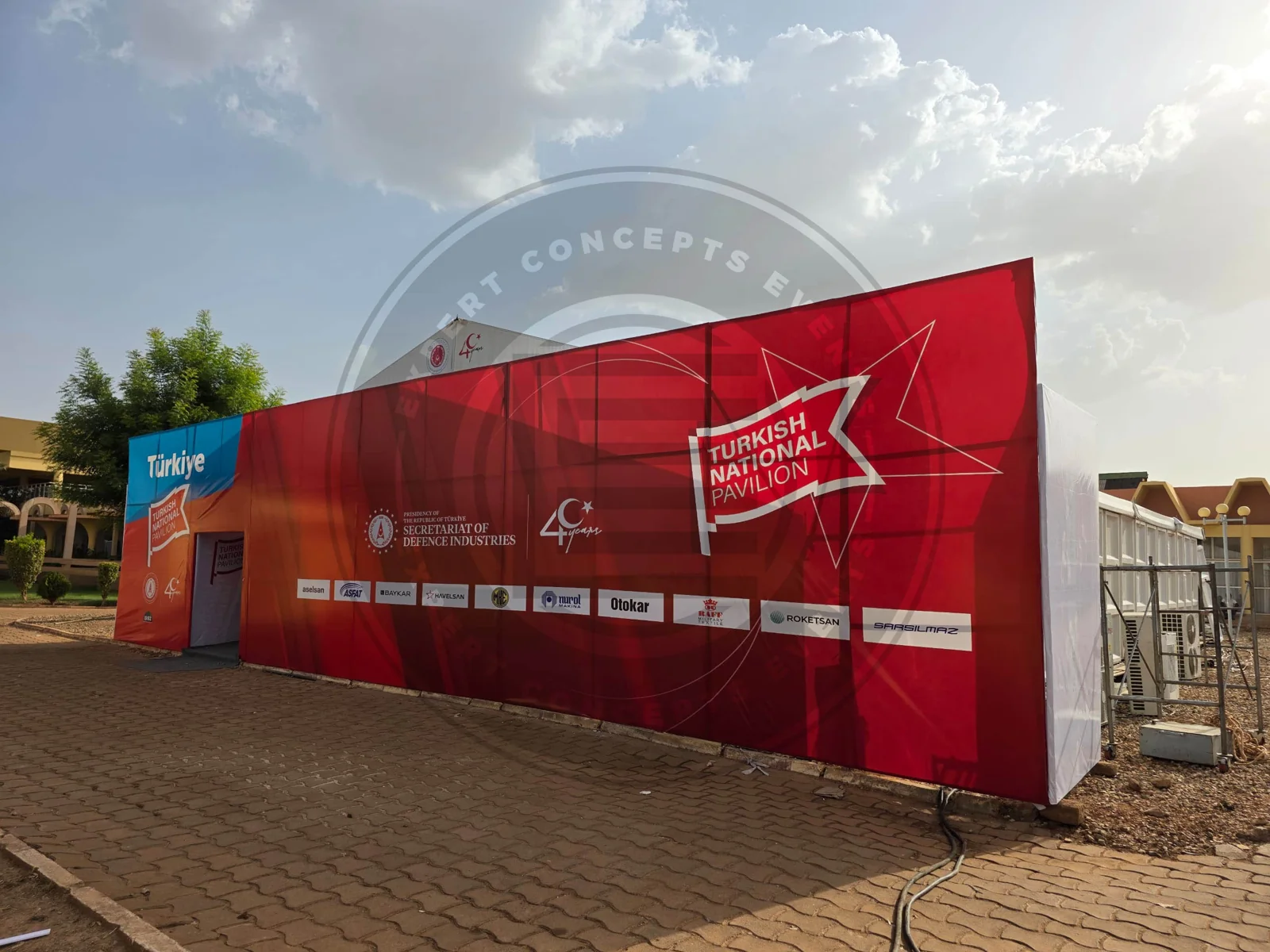
Prominent exterior branding introduces a pavilion with individual exhibitor displays, shared seating and a dedicated meeting room. The project gallery shows how a common identity can connect several exhibition areas while leaving room for business conversations. Explore the exterior and interior views to understand the format, then identify which elements are relevant to your own exhibitors, audience and allocation.
Build the brief around every participating exhibitor
A pavilion needs an overall plan and a clear schedule for each company within it. Record each exhibitor’s allocated space, logo, graphics, product display, furniture and screen requirements. Identify which items are standard across the pavilion and which are exceptions. This makes it easier to review the design as a whole and prevents an individual company’s requirements from being lost within the shared brief.
Set one artwork and approval process
National pavilions can involve a central organiser, several brands and different approval contacts. Nominate the person who can sign off the common design and collect each company’s approved assets. Specify the languages needed on fascia, wall graphics and presentation content, and who checks each version. Keep artwork deadlines connected to the production schedule so changes can be reviewed before files are released for fabrication.
Define the production and handover responsibilities
Share the Burkina Faso venue, stand plan, organiser’s manual and access schedule with your enquiry. Include any design already prepared by your agency; Conceptz GH can work from completed designs. Ask for the proposed build, technical elements, transport, installation and dismantling responsibilities to be identified separately. For handover, decide whether the central organiser approves the whole pavilion or each exhibitor reviews its own area.